Kathak Hasta Mudra

Kathak Hasta Mudra: The Complete Guide to Hand Gestures in Kathak Dance

Introduction

A Kathak hasta mudra is a hand gesture used by dancers to communicate emotion, character, and story without speaking a single word. In Kathak — one of the eight classical dance forms of India — every hasta mudra carries centuries of codified meaning, drawn from ancient dance treatises like the Natyashastra and the Abhinaya Darpan. At Gurukul Dance Studio, we teach these gestures as the very alphabet of dance: just as letters form words, mudras form the visual language a Kathak dancer uses to tell a story.

This guide breaks down every category of hasta mudra — Asamyukta (single-hand), Samyukta (double-hand), and Nritta (technical dance) hastas — with their meanings, traditional shlokas, and how they’re used on stage.

What Is a Hasta Mudra?

The word mudra comes from the Sanskrit root mud, meaning “joy” or “delight,” combined with the suffix ra, meaning “to give.” In classical dance texts, a hasta mudra is defined as a hand formation so precise and expressive that it pleases both the performer and the observer — traditionally described as gestures that please the gods when offered in devotion.

In Kathak, hasta mudras are also called Hasta-abhinaya (hasta + abhinaya, meaning “hand expression”). They are not decorative — each mudra is a building block of abhinaya, the art of expressive storytelling that separates classical dance from ordinary movement.

The Origin of Hasta Mudras in Classical Texts

Two ancient texts form the foundation of every hand gesture taught today:

  • Natyashastra, attributed to Bharata Muni, recognizes 64 total hand gestures — 24 Asamyukta (single-hand), 13 Samyukta (double-hand), and 27 Nritta hasta (technical dance gestures).
  • Abhinaya Darpan, written by Acharya Nandikeshwar, recognizes 55 total gestures — 32 Asamyukta and 23 Samyukta hasta — without separately classifying Nritta hasta.

Kathak, like other Indian classical dance forms, draws primarily on the Abhinaya Darpan’s classification, which is why most Kathak institutions — including Gurukul Dance Studio — teach the 32 Asamyukta and 23 Samyukta hastas as the core vocabulary.

Asamyukta Hasta Mudra (Single-Hand Gestures)

In the world of Kathak hasta mudra, Asamyukta hasta mudra refers to any gesture formed using a single hand. These are typically the first mudras taught to beginners because they form the base from which many Samyukta (double-hand) gestures are constructed.

The traditional shloka that lists all 32 Asamyukta hastas begins:

Pataka Tripataka cha Ardhapataka Kartarimukham Mayurakhyo Ardhachandrashcha Arala Shukatundakaha

Below is a reference table for quick recall — a format many learners find easier to memorize than prose descriptions.

pataka mudra

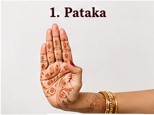
Pataka

All fingers straight and joined, thumb bent

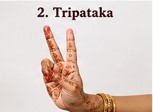
Tripataka

Tripataka

Pataka with ring finger bent

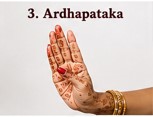
Ardhpataka

Ardhapataka

Tripataka with little finger also bent

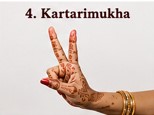
kartarimukha

Kartarimukha

Ardhapataka with index and little finger spread

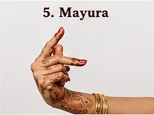
Mayura

Mayura

Ring finger and thumb joined, little finger raised

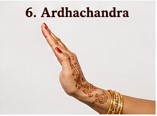
Ardhachandra

Pataka with thumb stretched outward

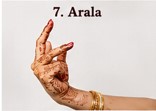
Arala

Arala

Pataka with index finger bent

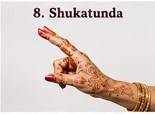
shukatunda

Shukatunda

Arala with ring finger bent

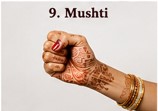
mushti mudra

Mushti

All fingers folded into a fist, thumb on top

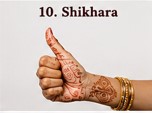
shikara mudra

Shikhara

Mushti with thumb raised

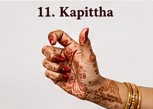
kapittha mudra

Kapittha

Shikhara with index finger bent onto thumb

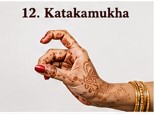
katakamukha Mudra

Katakamukha

Kapittha with middle finger added

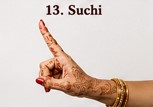
Suchi

Katakamukha with index finger raised

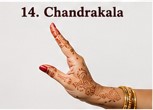
chandrakala Mudra

Chandrakala

Suchi with thumb stretched out

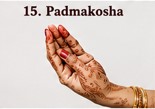
padmakosha mudra

Padmakosha

Fingers spread and slightly curved inward

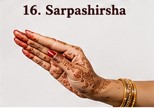
Sarpashirsha Mudra

Sarpashirsha

Pataka with fingers slightly bent

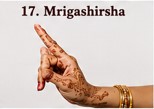
mrigashirsha mudra

Mrigashirsha

Sarpashirsha with little finger and thumb raised

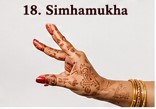
Simhamukha mudra

Simhamukha

Middle and ring finger joined with thumb

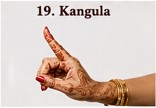
kangula mudra

Kangula

Padmakosha with ring finger bent inward

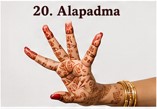
alapadma mudra

Alapadma

All fingers spread and slightly bent

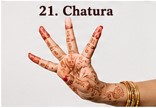
Chatura

Little finger stretched, thumb touches ring finger

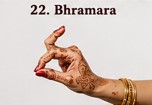
bhamara mudra

Bhramara

Index finger folded, middle finger and thumb touching

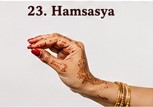
Hamsasya mudra

Hamsasya

Arala with index finger on thumb

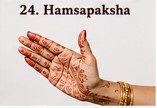
hamsapaksha mudra

Hamsapaksha

Sarpashirsha with little finger stretched straight

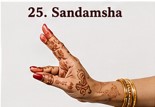
Sandamsha mudra

Sandamsha

Padmakosha fingers opened and shut repeatedly

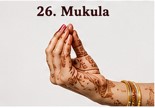
mukula mudra

Mukula

All fingertips joined together

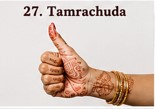
Tamrachuda mudra

Tamrachuda

Mukula with index finger raised and crooked

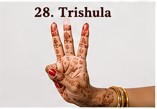
Trishula mudra

Trishula

Little finger and thumb joined, three fingers spread

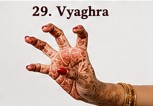
vyaghra mudra

Vyaghra

Mrigashirsha with little finger and thumb bent

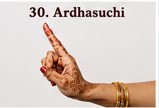
ardhasuchi mudra

Ardhasuchi

Kapittha with index finger raised

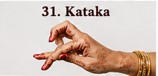
kataka mudra

Kataka

Sandamsha with middle and ring finger extended

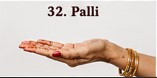
palli mudra

Palli

Mayura with index finger tucked behind middle finger

Each mudra above is taught hands-on in our beginner Kathak batches at Gurukul Dance Studio, where instructors correct finger alignment in real time — something a written guide alone cannot replace.

Samyukta Hasta Mudra (Double-Hand Gestures)

As the double-hand counterpart to the Kathak hasta mudra system, Samyukta hasta mudra refers to gestures that require both hands working together, often combining two Asamyukta hastas into a new symbolic form. These gestures are typically introduced once a student has developed control over single-hand positions, since precision in both hands simultaneously demands more muscle memory.

The classical shloka opens with:

Anjalischa Kapothashcha Karkata Swastikastathaa Doläknstha Pushpaputaha Utsangaha Shivalingakaha

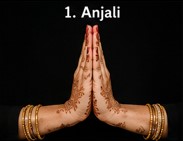
Anjali Mudra

Anjali

Two Pataka hastas joined palm-to-palm

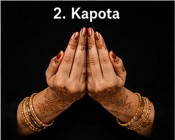
kapota mudra

Kapota

Anjali with fingers slightly bent

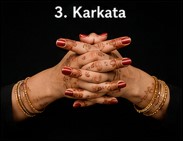
karkata mudra

Karkata

Fingers interlocked

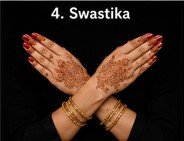
swastika mudra

Swastika

Two Pataka hastas crossed at the wrist

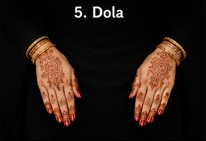
Dola mudra

Dola

Pataka hastas resting on the hips

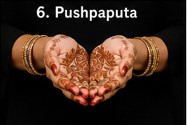
Pushpaputa mudra

Pushpaputa

Two Sarpashirsha hastas joined at the little finger

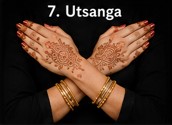
Utsanga mudra

Utsanga

Mrigashirsha hastas crossed over opposite shoulders

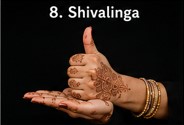
Shivalinga mudra

Shivalinga

Shikhara resting on Ardhachandra

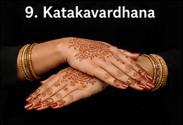
Katakavardhana mudra

Katakavardhana

Two Katakamukha hastas overlapped at the wrist

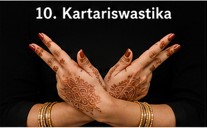
Kartariswastika mudra

Kartariswastika

Two Kartarimukha hastas crossed

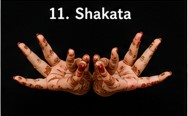
Shakata mudra

Shakata

Bhramara hastas with fingers separated

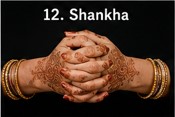
Shankha mudra

Shankha

Thumb and fingers interlocked to form a shell shape

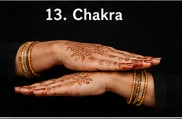
Chakra mudra

Chakra

Two Ardhachandra hastas placed one over the other

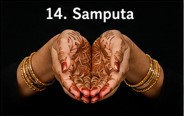
Samputa mudra

Samputa

Chakra with fingers folded to enclose the palms

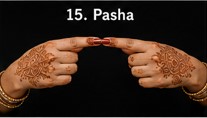
Pasha mudra

Pasha

Two Suchi hastas are linked at the index finger

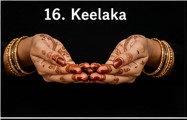
Keelaka mudra

Keelaka

Mrigashirsha hastas joined at the little finger

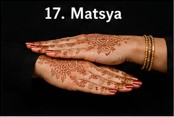
Matsya mudra

Matsya

One palm resting on the back of the other

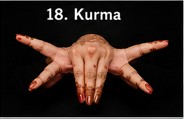
Kurma mudra

Kurma

Samputa with index and little finger spread

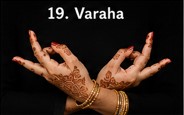
Varaha mudra

Varaha

Mrigashirsha hastas with thumb and little finger spread

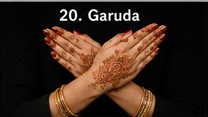
Garuda mudra

Garuda

Ardhachandra hastas crossed with thumbs overlapping

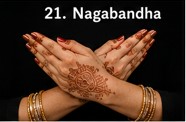
Nagabhanda mudra

Nagabandha

Two Sarpashirsha hastas crossed

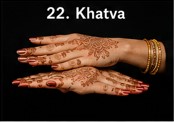
Khatva mudra

Khatva

Two Chatura hastas stacked with fingers separated

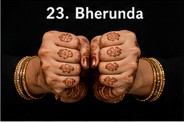
Bherunda mudra

Bherunda

Two Kapittha hastas joined at the wrist

Nritta Hasta (Technical Dance Gestures)

Nritta hasta gestures differ fundamentally from Asamyukta and Samyukta hastas — they exist primarily to enhance the rhythm and visual geometry of pure dance (nritta) rather than to convey narrative meaning. The Natyashastra lists 30 such gestures, while the Abhinaya Darpan recognizes 13. Because Kathak places heavy emphasis on rhythmic footwork (tatkaar) and spins (chakkars), Nritta hasta plays a larger role in this form than in many other classical styles.

A few of the most frequently used Nritta hastas in a Kathak recital include:

  • Chaturasra — hands held in Katakamukha at chest height with shoulders level, used to frame the torso during footwork sequences.
  • Pallava — two Pataka hastas joined at the wrist, commonly seen at the opening of a thaat (the formal entry posture in Kathak).
  • Lata — hands spread diagonally and opened outward, used during flowing, creeper-like arm extensions.
  • Karihasta — an extension of Lata where one hand swings while the other rests near the face in Tripataka, often used in fast tatkaar combinations.
  • Rechita — two Hamsapaksha hastas twisted rapidly with palms turned upward, giving a decorative flourish to spins.

Because these gestures don’t carry fixed symbolic meaning the way Asamyukta or Samyukta hastas do, they’re best learned through repetition and rhythm training rather than memorization — something our instructors at Gurukul Dance Studio build into every tatkaar class.

Kathak vs Bharatanatyam: How Mudra Usage Differs 

Both Kathak and Bharatanatyam draw on the same foundational texts, but the way a hand gesture is used on stage differs noticeably from its counterpart in South Indian classical forms.

Aspect

Kathak

Bharatanatyam

Primary source text

Abhinaya Darpan

Abhinaya Darpan + regional treatises

Emphasis

Fluid arm movement, spins, footwork rhythm

Sharp, geometric hand and eye coordination

Nritta hasta role

Prominent — tied closely to tatkaar and chakkar

Present but secondary to adavus

Storytelling style

Persian-Mughal-influenced narrative abhinaya

Temple-rooted devotional abhinaya

Hand-to-eye coordination

Softer, flowing gaze

Sharper, more angular gaze (drishti bheda)


Understanding this distinction is useful for students who train in more than one classical form, since the same hasta mudra name can carry a slightly different stage quality depending on style.

Why Learning Hasta Mudras Matters

A dancer who has memorized the shape of every mudra but hasn’t internalized its expressive use has only learned half the skill. Mudras exist to serve abhinaya — without emotional context, even a technically perfect Mushti or Pataka reads as empty movement.

At Gurukul Dance Studio, our approach centers on three stages:

  1. Formation — getting the finger positions technically correct
  2. Application — using the mudra within a real composition or bhajan
  3. Expression — connecting the gesture to genuine emotion so the story reads clearly to an audience

This is also why hasta mudras are traditionally passed down through direct guidance from a guru rather than through books or videos alone — subtle corrections in finger tension and wrist angle are difficult to self-teach.

Learn Hasta Mudras with Gurukul Dance Studio

Reading about a Kathak hasta mudra is a starting point — performing it with the right tension, angle, and expression takes guided practice. At Gurukul Dance Studio, our instructors work with students one-on-one to correct hand formation and connect each mudra to real abhinaya, whether you’re a complete beginner or preparing for a stage performance.

Book a trial class with Gurukul Dance Studio to start learning hasta mudras the traditional way — under direct guidance, not just from a screen.

Frequently Asked Questions

Kathak typically follows the Abhinaya Darpan classification, which recognizes 55 total hasta mudras — 32 Asamyukta (single-hand) and 23 Samyukta (double-hand) — alongside a separate set of Nritta hasta used for pure dance movement.

Asamyukta hasta mudras involve using only one hand, while Samyukta hasta mudras involve using both hands in coordination to form one posture by combining two Asamyukta mudras.

It can be safely said that Pataka is the most commonly used mudra in Kathak, as it serves as the base for many other Asamyukta and Nritta hastas.

Many Indian classical dance styles have their basis in the same texts, the Natyashastra and Abhinaya Darpan, so most of the mudra nomenclature and the formations are similar in all of them. Nevertheless, each style has its own way of styling, the frequency of usage, and the quality of expression.
The guide is useful for understanding the nomenclature, meanings, and formations of the mudras, but correct finger tension, wrist angle, and expressive timing should be learned under the personal observation of a guru.
Let's Connect!
1
Need Help?
Hello there!
How can we assist you today?