Kathak Classes for Edmonton Students — Train With Gurukul Dance Studio
If you’ve typed “Kathak classes near me” into Google while sitting in Edmonton, you’ve probably run into the same wall a lot of families do. The local options are either a handful of independent teachers with limited availability, or online-only programs where you’re learning footwork through a laptop screen and hoping your posture is right. Neither one really solves the problem if what you actually want is hands-on correction, real stage experience, and an instructor who can watch your ghungroo work up close and tell you exactly what to fix. That’s exactly the gap we’ve built our Kathak classes for Edmonton students around — a real, structured program you can actually travel to, rather than another directory listing or a screen-only session.
That’s the gap we’re writing this page to address — honestly, and without pretending to be something we’re not.
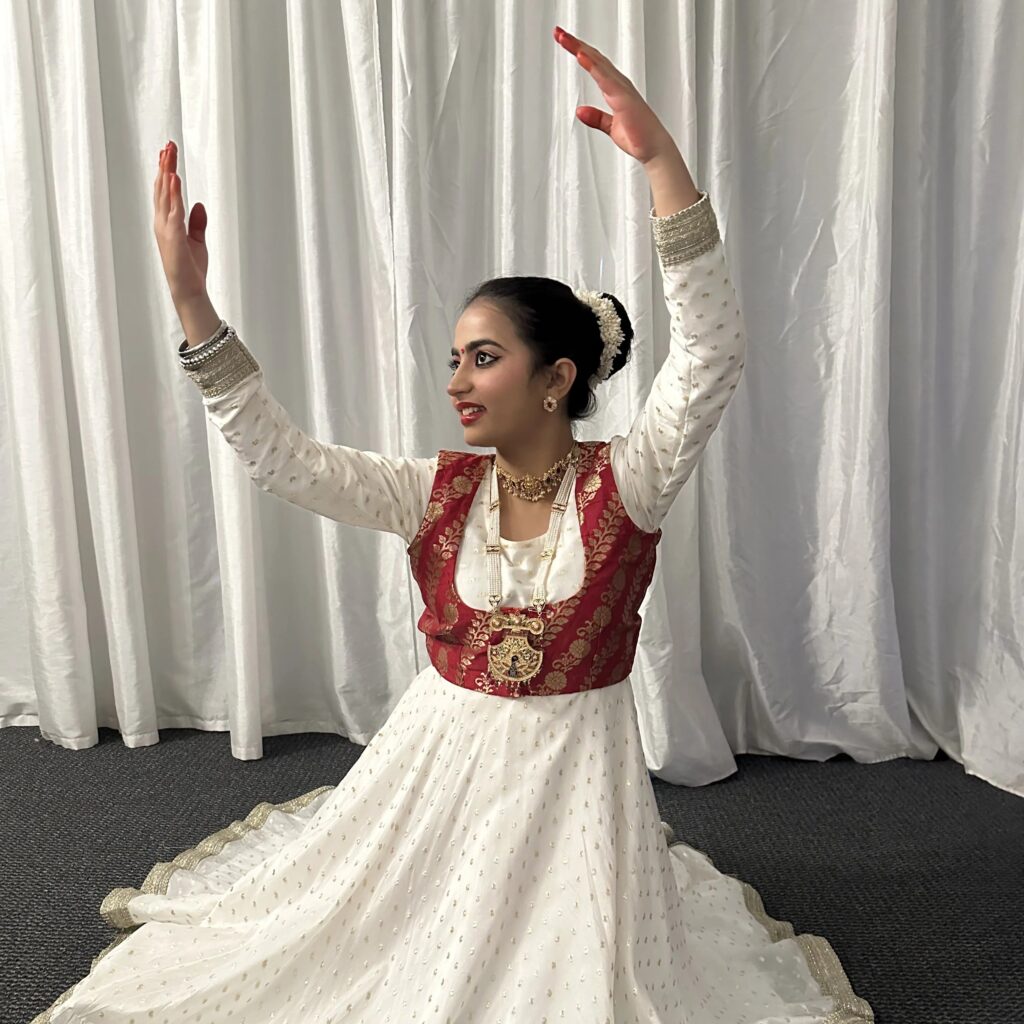
Gurukul Dance Studio is based in Calgary. We don’t have a branch in Edmonton, and we’re not going to imply otherwise. What we do have is a structured, serious Kathak dance program that a growing number of Edmonton families have decided is worth the drive for. This page walks through exactly what that program looks like, who it’s actually right for, and — just as importantly — who it isn’t, so you can make a genuinely informed decision instead of a hopeful one.
Why Kathak Is Different From Almost Every Other Dance Style You Could Learn Online
Kathak isn't something you can pick up the way you might pick up basic Zumba or a simple hip-hop routine from a video. It's a classical Indian dance form built on four demanding, interlinked skills:
Tatkar
Precise, rhythmic footwork that has to land exactly on the beat
Chakkars
Controlled spins that require spotting technique to avoid dizziness and loss of form
Mudras
Hand gestures that carry specific meaning and need exact positioning
Abhinaya
Facial and bodily expression used to narrate a story through movement
Every one of these is corrected through direct observation. A teacher needs to see whether your spine is aligned, whether your feet are striking the floor in the right pattern, whether your spin is drifting off-centre, and whether your expression actually reads from a few feet away. A screen simply cannot catch most of that in real time.
Online Kathak classes can teach you about the form — the history, the counts, the general shapes. They struggle to teach you the form itself at any serious level.
So if you're in Edmonton and genuinely committed to progressing rather than just dabbling, your realistic options narrow down to three:
Find a qualified local instructor and hope their experience level, teaching style, and schedule all line up with what you need
Settle for an online program and accept that your technical growth will be slower and harder to self-correct
Travel to an established studio with a structured program, even if that means factoring in drive time
This page is for the families and adult learners seriously weighing that third option.
What Our Kathak Program Actually Involves
Our Kathak dance program isn’t a loose set of drop-in sessions — it runs as a structured, progressive 12-week series. You can see our current cycle here: Journey to Kathak.
Here’s roughly how the progression is built:
- Weeks 1–3: Rhythm foundations and basic tatkar — building the internal sense of beat that everything else depends on
- Weeks 4–6: Footwork combinations and introductory chakkars, with an emphasis on posture and spine alignment
- Weeks 7–9: Hand gestures, expression work, and combining footwork with storytelling elements
- Weeks 10–12: Choreography assembly, refinement, and preparation for a short performance piece

We deliberately keep batch sizes small. Kathak depends on an instructor being able to watch each student closely — whether their spine is straight, whether their spin is spotting correctly, whether their footwork lands cleanly on the beat. That kind of attention isn’t possible in a room of thirty students, so we don’t run classes that way. Every student gets individual correction, not just group instruction shouted from the front.
Classes are open across age groups — kids, teens, and adults — and we’ve had complete beginners with zero prior dance background walk into a real stage performance within a matter of months of starting.
Why Some Edmonton Families Choose to Make the Drive
We won't undersell this: the drive from Edmonton to Calgary is roughly three hours each way. That's a real commitment, and it isn't the right fit for every family. But here's what tends to make it worthwhile for the ones who do it:
Weekend and evening batch scheduling
We structure certain batches so a single round trip covers a meaningful class session, rather than requiring multiple visits a week — something that would make the travel unreasonable.
An experienced, multi-instructor team
Not a single part-time freelancer teaching between other jobs. Consistency in teaching quality matters more in a classical form than in almost any other style.
Genuine performance opportunities
Our students take part in cultural events, community showcases, and competitions throughout the year — not just a single end-of-term recital tucked into a hallway. For a classical art form, stage exposure is part of actually learning it, not an optional extra.
A program that's actually structured
Meaning progress is visible and trackable rather than open-ended and vague. Parents in particular tend to value being able to see what their child has learned by week 6 versus week 12.
A studio built for more than one style
If your family's interest in dance extends beyond Kathak, we also teach Bollywood dance , Bhangra and Giddha , and wedding choreography — so a single trip can sometimes cover more than one interest in the family.
If you're the kind of parent — or adult learner — who's already comparing programs by curriculum and instructor quality rather than pure convenience, this combination is usually what tips the decision.
Is This Actually the Right Fit for You? (An Honest Answer)
We’d rather tell you this now than have you find out three classes in. This program tends to work well for:
- Families who can realistically commit to occasional travel in exchange for a higher level of instruction
- Serious students preparing for exams, performances, or competitions who need focused, in-person technical correction
- Anyone who’s already tried an online Kathak program and found the feedback too limited to actually improve
- Students or families planning an eventual move to Calgary who want to start building a relationship with a studio ahead of time
- Adults returning to dance after a long break who want structured, patient instruction rather than being thrown into an advanced class

It’s probably not the right fit if you need twice-weekly classes with zero travel time, or if a nearby local instructor already meets your needs — and if that’s your situation, we’d genuinely rather you find the right local fit than force a commute that won’t stick.
A Bit About Who’s Actually Teaching
Our program was founded by Nisha Chawla, whose teaching blends traditional Kathak training with an approach built for how students actually learn today — patient with true beginners, demanding with those ready to advance, and genuinely invested in performance quality rather than just attendance numbers. You can read more about our instructor team’s backgrounds on our about page, and see what current students and parents have said about their experience on our reviews page.

What Makes Us Different From a Typical Search Result
A lot of what shows up when searching for Kathak instruction near Edmonton falls into one of two categories — generic directory listings that haven’t been meaningfully updated in years, or online-only programs run remotely with limited hands-on feedback. We’re neither of those things. We’re a working studio with a physical space, real batch schedules, small class sizes, and an instructor team that built this program specifically around visible, trackable skill progression rather than just filling seats.
Ready to See If It's the Right Fit?
If you're an Edmonton-based dancer or parent who's genuinely serious about proper Kathak training and open to occasional travel, the most useful next step is simple: come try a class before committing to anything long-term.
Reach out through our contact page , let us know you're coming from Edmonton, and we'll help you find a batch and schedule that realistically works with the distance.
We'd rather have one honest conversation with you upfront than have you discover the commute doesn't fit your life after you've already signed up.
But for the families who've made it work, the progress students make in a properly structured, in-person Kathak program is usually worth every mile of the drive.
Contact Us →Frequently Asked Questions
No. The program is structured to take complete beginners through fundamentals before progressing into more advanced footwork, spins, and expression work. Age and prior training matter far less than consistency and willingness to practice between sessions.
This depends on which batch you join and how the 12-week cycle is scheduled at the time. We’d recommend reaching out through our contact page so we can walk through a schedule that actually makes sense for a trip from Edmonton — some families combine a class visit with other errands in the city to make the trip more worthwhile overall.
Yes. We offer a free trial class specifically so you can experience the teaching style, meet the instructor, and see the studio environment firsthand before deciding whether the travel is worth it for your situation.
Kids, teens, and adults are all welcome. Younger children typically begin with rhythm and basic movement work, while teens and adults can move into technical footwork and expression more quickly.
It’s more demanding, but yes. Many of our longer-distance students structure home practice between visits using drills and guidance we provide, then use in-person sessions primarily for correction, feedback, and progression to the next stage. Consistency of practice ends up mattering more than daily class attendance — but it does require real discipline on the student’s part.
Students who complete the full 12-week cycle typically have the opportunity to perform in a studio showcase or community event, which serves as both a milestone and a practical demonstration of what they’ve learned.
Comfortable clothing that allows free movement, and if you already own ghungroo (ankle bells), you’re welcome to bring them — though they’re not required for a first visit.