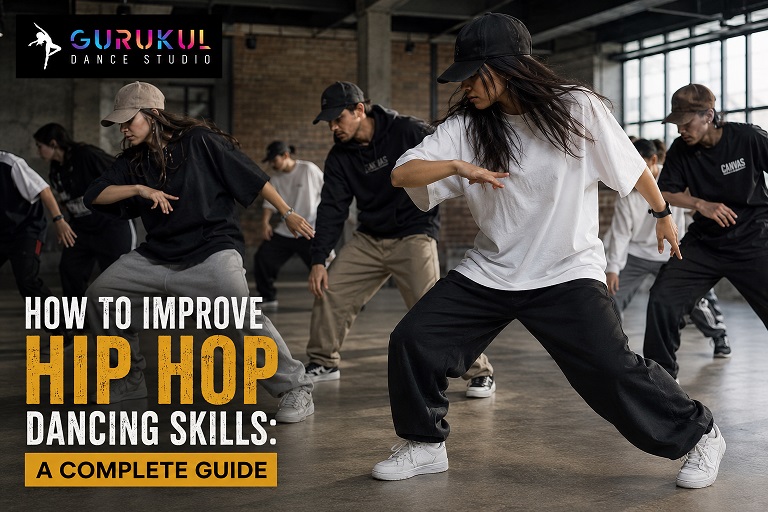
How To Improve Hip Hop Dancing Skills: A Complete Guide for Every Dancer
If you’ve ever left class wondering why your moves don’t look nearly as sharp as your instructor’s, you’re already asking the right question. Learning how to improve hip hop dancing skills isn’t really about memorizing flashier combinations — it comes down to building the right technical habits, training your ear for rhythm, and practising with a bit more intention than just “doing it again.”
You’ve probably read a dozen lists of hip hop dance tips for beginners already — this one’s built around actual hip hop dance techniques we teach in the studio, not just generic internet advice. Whether you’re brand new to hip hop or you’ve hit a bit of a plateau, here’s a practical, honest breakdown of what actually moves the needle.
Where Hip Hop Dance Actually Comes From
Here’s something a lot of dancers skip past: understanding where hip hop dance comes from genuinely changes how you dance it. It stops being “steps you copied” and starts feeling like something you actually own. Hip hop dance grew out of New York City street culture in the late 1970s, alongside hip hop music itself. A few related funk styles took shape on the West Coast around the same time — popping is usually credited to dancer Boogaloo Sam, who built the style around sharp, timed muscle contractions, while locking came from Don Campbell, famous for freezing into big, exaggerated poses mid-movement. Breaking, another cornerstone of the culture, brought in standing footwork (toprock), floor-based footwork (downrock), freezes, and acrobatic power moves.
Why does this matter? Because every studio hip hop class you’ll ever take, even a beginner one, is quietly borrowing from all of this. When you’re drilling an isolation or holding a freeze, you’re practising hip hop dance techniques with over 40 years of history baked into them.
Why Bother Improving Your Hip Hop Skills at All?
It’s not just about looking good under stage lights, either. Research into structured dance-based movement programs has actually linked regular hip hop training to measurable gains in motor coordination and physical activity levels, especially when it’s practised consistently over a few weeks. And honestly, instructors see this play out constantly in class — students who train regularly don’t just get technically sharper; their focus, memory, and confidence on stage improve too, since routines demand constant memorization and quick physical response.
So if you’re wondering whether it’s worth the effort to figure out how to improve hip hop dancing skills, the short answer is yes — the payoff shows up well beyond the dance floor.
The Main Styles Worth Knowing
Part of getting better at hip hop is realizing it isn’t really one style — it’s a whole family of street dance forms, and each one teaches you something different:
- Breaking (b-boying/b-girling): footwork, floor work, freezes, and acrobatic power moves
- Popping: sharp muscle contractions (“hits”) landed precisely on the beat
- Locking: fast, exaggerated movement broken up by sudden freezes
- Krumping: raw, high-energy, emotionally expressive movement
- New style/commercial hip hop: studio-friendly choreography that blends a bit of everything
These aren’t just abstract categories, either — each one comes with its own set of hip hop dance techniques worth learning, even if you never plan to compete. If you’re figuring out how to improve hip hop dancing skills without getting bored, trying a few of these in class, rather than sticking to just one, is honestly one of the better ways to build well-rounded technique. Most hip hop dance tips for beginners skip this part entirely, but most Canadian studios, ours included, will let you sample different styles before committing to one.
10 Things That Actually Improve Your Hip Hop Dancing
1. Nail the Fundamentals First
Every advanced move you’ll ever learn is built on bounce, groove, and posture. Honestly, most hip hop dance tips for beginners skip straight to combos and gloss over this step completely — that’s usually the mistake. Rushing past these basics to chase harder combos is probably the number one reason dancers hit a wall. Start every practice session with a few minutes of pure groove — no choreography, just feeling the beat. If there’s one place to start when you’re trying to improve hip hop dancing skills, it’s here, not with the flashier stuff.
2. Train Your Musicality, Not Just Your Memory
Hitting the counts correctly isn’t the same as actually feeling the music. Musicality is what makes a routine look alive instead of mechanical. Try listening to different hip hop tracks with real attention, counting beats out loud, and noticing how strong dancers accent specific lyrics or drum hits. It sounds simple, but this one habit genuinely speeds up how quickly you improve hip hop dancing skills — more than most people expect from something so basic.
3. Practise Isolations, Even for Five Minutes
Isolation techniques in dance mean moving one body part — your head, chest, shoulders, or hips — completely on its own, without the rest of your body following along. It’s a core skill behind almost every sharp hip hop movement you’ll see. Start slow in front of a mirror, and only add speed once the movement genuinely feels clean.
4. Get Comfortable With Popping and Locking
These are two of the more technical funk-style skills in hip hop, and they’re worth the extra practice. Popping comes from quickly contracting and releasing specific muscles to create a sharp “hit” right on the beat. Locking is fast, exaggerated movement that suddenly freezes into a held pose before releasing again. Practising these on their own, separate from full routines, is what builds the control to pull them off cleanly when it counts — and it’s a step a lot of dancers skip when they’re trying to improve hip hop dancing skills quickly. Once popping and locking feel natural on their own, they start showing up in your freestyle without you even thinking about it.
5. Learn Basic Breaking Footwork, Even if You’re Not a Breaker
You don’t need to want to break to benefit from breaking basics. Simple toprock and downrock patterns build lower-body coordination and timing that carry over into pretty much every other hip hop style. Even five minutes of footwork drills a week noticeably tightens up your overall movement.
6. Actually Warm Up, Every Time
This one matters more in Canada than you might think — cold muscles (and cold Calgary mornings) are a fast track to stiff, injury-prone movement, which is the exact opposite of hip hop’s loose, grounded style. It’s actually one of the first things instructors at most hip hop dance classes in Calgary studios run a check for before class even starts. A short dynamic warm-up — light cardio, arm circles, hip rotations, a few controlled squats — gets your body ready for quick, sharp movement and cuts down injury risk.
7. Film Yourself and Actually Watch It Back
This is one of the most underused tips out there. Recording your practice reveals timing issues, tension, and technical gaps you genuinely can’t feel while you’re dancing. Compare a few weeks of clips side by side — seeing real progress tends to be far more motivating than just hoping you’re improving.
8. Freestyle More Than You Think You Should
Choreography teaches you steps; freestyle teaches you your own style. Most freestyle dance tips say the same thing — just move, don’t overthink it — and honestly, that really is most of the trick. Set aside five or ten minutes a few times a week to just move to music, no structure, no plan. It builds improvisation skills and helps you find movement that actually feels like you, which choreography alone can’t really teach.
9. Let a Real Instructor Watch You
Practising alone only gets you so far. A trained instructor will catch small technical issues — posture, isolation control, timing — that are almost impossible to notice on your own, and fix them before they become habits. Structured classes also add a level of accountability that solo practice at home rarely provides. If you’re serious about how to improve hip hop dancing skills long-term, regular feedback from someone qualified is honestly non-negotiable.
10. Build a Routine You’ll Actually Stick To
Progress comes from repetition, not the occasional marathon session. Even 15 to 20 focused minutes a day builds muscle memory faster than one long weekly class. A simple weekly split that works for most dancers:
- 2 days: isolation and technique drills
- 2 days: musicality and rhythm work
- 1 day: freestyle
- 1 day: full run-throughs with recording and review
Set small, specific goals — clean up one move, tighten one transition — instead of something vague like “get better.” Rotating through different hip hop dance techniques on different days, rather than drilling the same thing daily, also keeps practice from getting stale.
The Mistakes That Quietly Slow Everyone Down
Even genuinely motivated dancers slow their own progress without realizing it. A few things instructors notice constantly in beginner and intermediate classes:
- Rushing into choreography before the fundamentals are solid, which locks in sloppy habits that are hard to undo later
- Practising without music, which weakens your sense of rhythm and timing over time
- Skipping freestyle out of fear of “doing it wrong” — freestyle doesn’t really have a wrong answer, and reading freestyle dance tips without ever actually practising it won’t build real instinct either
- Comparing yourself to other dancers instead of tracking your own progress week to week
- Skipping the warm-up, which limits range of motion and raises injury risk during sharper movements
Fixing just these five habits is often the fastest way to improve hip hop dancing skills without changing anything else about how you train.
How to Actually Track Your Progress
One of the more motivating parts of getting better at hip hop is being able to see it happen — but most dancers never track it in any structured way. A simple monthly check-in helps:
- Film the same short combo at the start and end of each month, using the same framing so it’s a fair comparison
- Rate yourself on three specific things each time — timing, isolation control, and confidence, say — instead of judging the whole routine at once. Isolation techniques in dance tend to be the easiest of the three to actually measure.
- Keep a short practice log noting what you focused on each session, so patterns (and plateaus) become easier to spot
- Ask your instructor for one focus area per month rather than trying to fix everything at once
Dancers who track their progress this way tend to stay motivated longer, simply because the growth becomes visible instead of assumed — and honestly, that visible progress is what keeps most people committed to actually working on how to improve hip hop dancing skills instead of giving up after a few weeks.
Ready to Actually Put This Into Practice?
Reading about technique is a good start, but the real progress happens on the dance floor, with someone experienced watching and correcting as you go. If you’re comparing hip hop dance classes Calgary studios offer, look for small batch sizes and instructors who actually give individual feedback, not just choreography on repeat. At Gurukul Dance Studio in Calgary, our Hip Hop Dance Classes help kids, teens, and adults improve hip hop dancing skills through proper technique training, freestyle confidence-building, and performance-ready choreography — in a small-batch, supportive environment led by experienced instructors.
Frequently Asked Questions
With consistent practice two or three times a week and proper instruction, most beginners notice real improvement in rhythm, control, and confidence within four to eight weeks.
Definitely. Hip hop dance doesn’t have an age limit. Plenty of adults start with zero experience and improve quickly through structured beginner classes and regular practice at home.
No. Flexibility, stamina, and strength all develop as a result of hip hop training — they’re not something you need before you walk in the door.
Pairing structured classes with focused solo practice on isolations, musicality, and freestyle tends to produce the quickest, most well-rounded improvement, since each piece reinforces the others.
Honestly, both help — but most dancers who want to improve hip hop dancing skills efficiently do a bit of both: classes for expert correction and structure, solo practice for repetition and freestyle exploration.